The short answer
Hand strength is built by loading your hands against resistance and then gradually asking a little more of them. Muscle responds fairly quickly, but tendons and the small joints of the hand adapt more slowly, so the gains come from steady, repeated work rather than the hardest squeeze you can manage on day one.
A workable routine is short: 10 to 15 minutes, two or three times a week, covering four things — crush, pinch, support and finger extension. Add a two-minute warm-up, note down what you did, and increase one variable at a time.
What you need before you start
You do not need a gym or specialist kit. Most of it lives in a kitchen drawer: a rolled-up towel, a bag of rice or dried beans, a rubber ball, a couple of heavy hardback books, a resistance band, and a bar you can hang from safely — a pull-up bar that you have checked is properly fixed, for example.
- Sessions per week
- 2–3, with a rest day between heavy grip sessions
- Session length
- 10–15 minutes, including a 2-minute warm-up
- Sets and reps
- 2–3 sets of 10–15 slow reps, or holds of 15–30 seconds
- Effort level
- Finish each set with two good reps still in reserve
- Recovery
- Around 48 hours before loading the same grip type again
- Useful kit
- Towel, rice or dried beans, rubber ball, resistance band, heavy books, hanging bar
Warm up your hands and wrists first
Cold, stiff hands strain more easily. Two minutes is enough:
- Finger flicks — shake the hands out and flick the fingers for 20 seconds
- Wrist circles — 10 slow circles in each direction, both wrists
- Tendon glides — straight hand, then hook fist, then full fist, five to ten times
- Gentle palm press — press the palms together at chest height and hold for 10 seconds
If your hands are cold to the touch, run them under warm water for a minute before you start.
Build your routine in seven steps
-
01 /
Take a baseline
Record three simple tests: how long you can hang from a bar with both hands, how many seconds you can pinch a heavy book between thumb and fingers, and how many slow ball squeezes you can do before your grip starts to slip. Write the numbers down — they give you something to beat that isn't guesswork.
-
02 /
Warm up for two minutes
Work through the finger flicks, wrist circles and tendon glides above. Do not skip this on cold mornings; it is the difference between a productive session and a tweaked thumb.
-
03 /
Train your crush grip
Crush is the fingers closing against the palm. Squeeze a rubber ball or a hand gripper, or wring a rolled towel hard. Hold the squeeze for three to five seconds and release slowly. Do 2–3 sets of 10–15 with each hand.
-
04 /
Train your pinch grip
Pinch a heavy hardback book by its cover, grip a dinner plate by the rim, or hold a clothes peg open. Aim for 2–3 sets of 20–30 second holds per hand, stopping before your form collapses.
-
05 /
Train your support grip
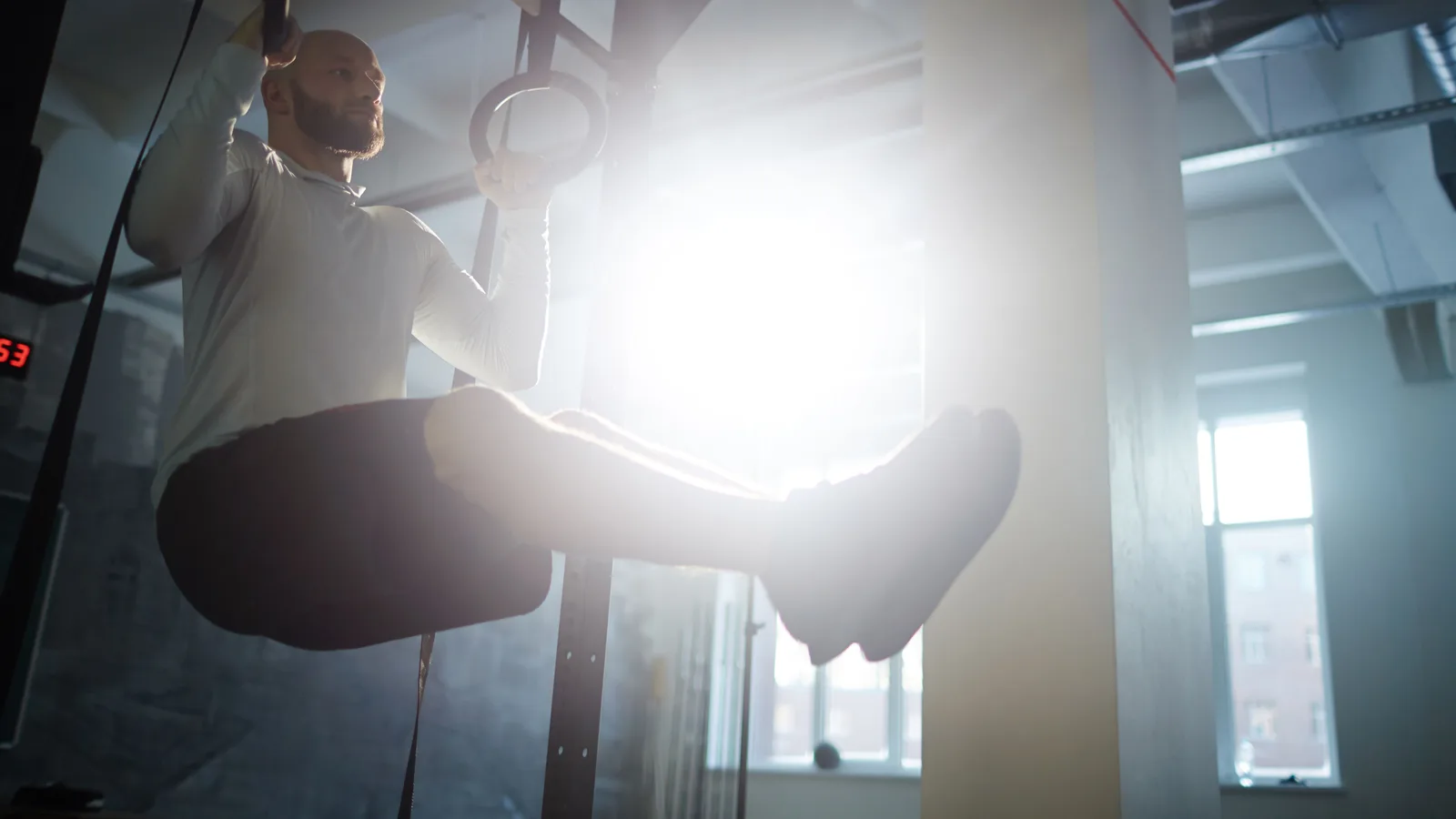
Support grip is how long you can hold on. Do dead hangs for 20–30 seconds, or pick up loaded shopping bags by the handles and walk for 30–40 seconds. Three rounds is plenty.
-
06 /
Train finger extension
Loop a resistance band around the fingertips and thumb, then open the hand against it; or splay the fingers against a band placed around them. Two sets of 15–20 slow reps. This balances all the gripping and keeps the elbow happier.
-
07 /
Log it and change one thing
At the end of each session, note the resistance, reps or hold times. Next week, add reps or seconds first, then a set, then resistance. Never increase all three at once.
The four grip types, and why you need all of them
Most people default to squeezing a ball, which trains only one of the four ways a hand works. Everyday life asks for all of them, so spread your training across the lot.
| Grip type | What it means | Where you use it | Ways to train it |
|---|---|---|---|
| Crush | Fingers closing against the palm | Opening jars, gripping a racket or a spanner | Ball squeezes, towel wringing, hand gripper |
| Pinch | Thumb pressing against the fingers with no palm support | Holding a plate, carrying a book, turning a stiff key | Book pinch holds, plate pinches, peg holds |
| Support | Hanging on to something heavy for time | Carrying shopping, gripping a handrail, hanging from a bar | Dead hangs, loaded carries |
| Extension | Fingers opening against resistance | Letting go of a grip cleanly, comfortable typing | Band finger extensions, finger splaying |
A simple week that fits around real life
Two sessions a week will move you forward; three is better if your hands recover well between them. A pattern that works for most people:
- Session A (Monday) — warm-up, crush grip, support grip (hangs or carries)
- Session B (Wednesday) — warm-up, pinch grip, finger extension, a couple of easy hangs
- Session A again (Saturday) — repeat Monday's session
Keep heavy gripping at least a day apart. Light mobility, stretching and warm-water hand soaks can happen daily.
How to progress without overdoing it
Progress in small increments and let the tissues catch up:
- Add reps or seconds before you add resistance
- Increase resistance only when the top of your rep range feels controlled
- Add no more than one extra set per week per grip type
- Take an easier week every four to six weeks — same exercises, half the sets
- Retest your baselines every four to six weeks rather than every session
If a number stalls for three weeks, look at sleep, overall training load and whether you are actually recovering between sessions before you add more work.
What commonly goes wrong
| Problem | Likely cause | What to do |
|---|---|---|
| Sore palm or thumb base the next day | Too much volume, too soon | Halve the sets for a week at the same resistance |
| Pain on the inside of the elbow | Lots of gripping, no extension work | Add band extensions to every session and cut gripping volume |
| No change in grip strength | The same load for weeks on end | Add reps or hold time first, then resistance |
| Tingling or numbness in the fingers | Long holds in an awkward wrist position | Stop the set, reset the wrist to neutral; see a professional if it persists |
| Skin splitting on the fingers | Dry skin plus high friction | Short nails, moisturise after sessions, ease off until it heals |
Hand care between sessions
Skin and joints need as much attention as muscle. Keep nails short so they do not dig into the palm during squeezes. Moisturise after training, especially if you use chalk or work with your hands outdoors. Wash and dry any handles, bands or balls you use, since these pick up sweat and grit.
If a callus becomes tender, file it down gradually rather than cutting it. Cracked skin on the palm or knuckles is a good reason to swap gripping work for extension and mobility work for a few days.
Safety: when to stop and get advice
How to know it is working
Grip strength changes slowly and quietly. The first signs are usually practical rather than measurable: jar lids give way more easily, shopping bags feel lighter on the walk home, and long hangs feel less like a countdown.
When you retest your baselines, compare like with like — same bar, same book, same time of day. A modest, steady improvement across six to eight weeks is a good result. Big jumps usually mean you tested on a good day, not that you doubled your hand strength.
Common questions about hand strength
Can I build hand strength without any equipment?
Yes. Towel wringing, pinching a heavy book, hanging from a fixed bar and pressing the fingertips together all load the hands effectively. Kit mainly makes it easier to measure the load and increase it in steps.
Should I train my hands every day?
Not with heavy resistance. Two or three sessions a week with a rest day in between suits most people. Gentle mobility, stretching and warm-water soaks can be done daily without getting in the way of recovery.
Does squeezing a stress ball count as grip training?
It trains crush grip endurance, but on its own it misses pinch, support and extension work, and a soft ball stops being a challenge quite quickly. Use it as one part of a rounded routine.
Why do my forearms ache more than my hands after grip work?
The muscles that close the fingers sit in the forearm, not in the hand itself, so a dull ache along the forearm is normal after a hard set. Sharp pain in the elbow joint, or pain that lingers for days, means you should ease off.
Will this help with climbing, tennis or carrying shopping?
It helps with the grip type you train — support grip for hanging and carrying, crush for racket handles, pinch for awkward loads. It supports those activities but does not replace practising them.
Does hand strength decline with age?
Grip strength does tend to fall as you get older, but hands respond to training at any age. The principles stay the same: load gradually, train two or three times a week and recover between sessions.