Resistance bands vs weights: the short answer
The question is usually framed as a straight swap, and it isn't one. Both tools create tension your muscles have to overcome; what changes is how that tension arrives, how easily you can add more of it, and how much of your home it swallows.
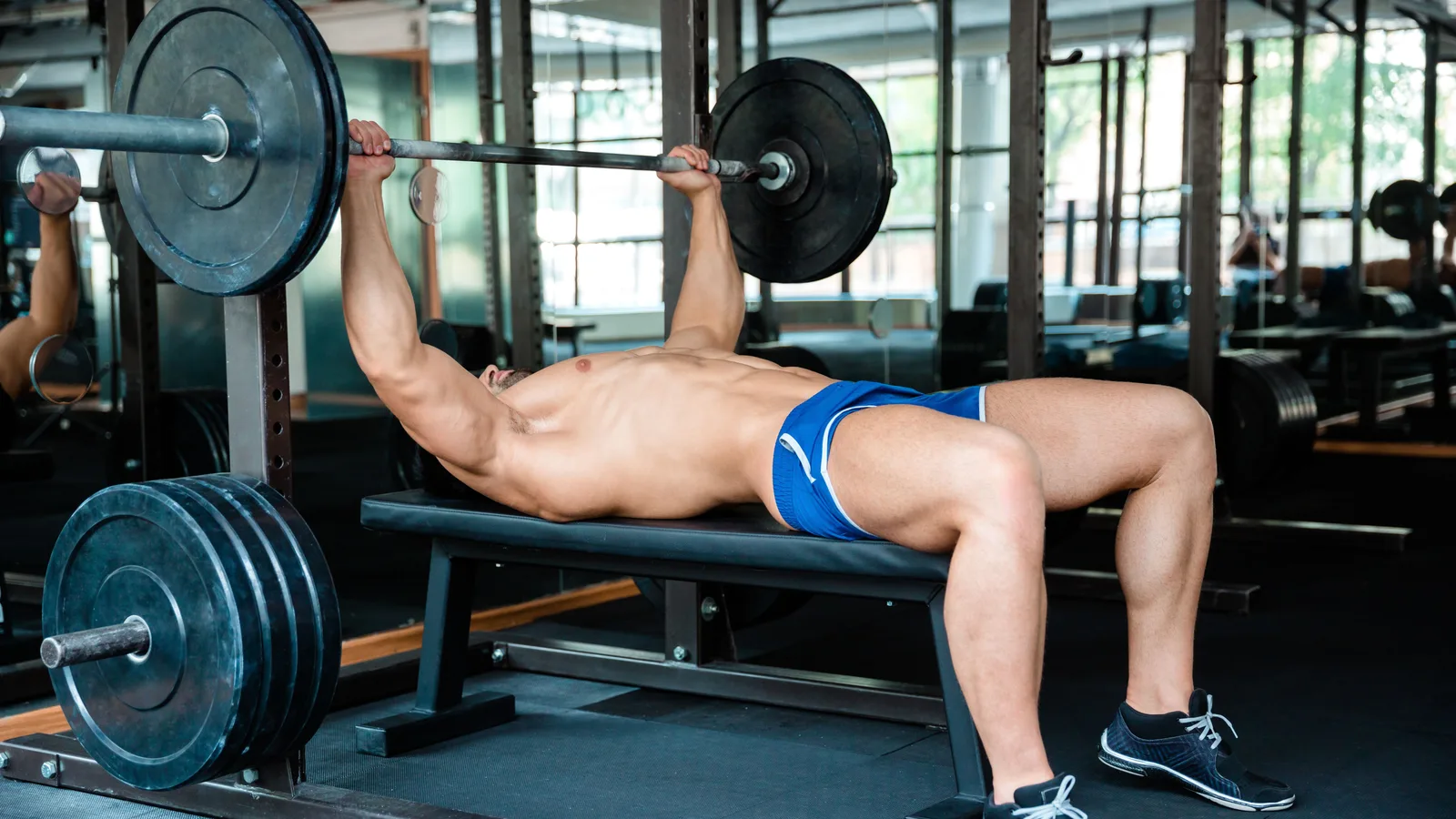
Bands give you variable resistance — light at the start of the rep, heaviest at the end. Weights give you constant resistance — the same load through the whole range, because gravity doesn't negotiate. Most of the arguments between the two camps come down to that single difference, plus the practical matter of storage.
Head to head: how they actually compare
| What matters | Resistance bands | Weights |
|---|---|---|
| Cost to get started | Low — one set of bands covers a full-body session | High — dumbbells or plates are the big-ticket purchase |
| Space needed | A drawer or a hook; you can train in a 2m x 2m patch | Floor space, plus somewhere to store plates or a rack |
| Resistance curve | Rises through the range, hardest at the end of the rep | Even through the range, set by gravity |
| Adding load over time | Change band thickness, step further from the anchor, slow the tempo | Add plates or move to the next dumbbell — the most precise option |
| Lowering phase | Assisted — the band pulls you back towards the start | Fully loaded; you can lower more than you lift |
| Joint comfort | Gentler at the start of the range, awkward for some heavy lifts | Loads joints at every angle, including heavy spinal loading |
| Portability | Fits in hand luggage | Fixed in place unless you buy a light travel set |
| Technique barrier | Low — the band guides the movement path | Higher for barbell lifts, where form matters a lot |
| Strongest use case | Home training, rehab, warm-ups, travel, high-rep work | Heavy compound lifts and measurable strength progression |
Read the table and a pattern appears: bands win on access and comfort, weights win on loading and measurement. Neither of those is a small thing, and which one matters more depends entirely on where you are training and what you are training for.
Where resistance bands win
Bands are the most underrated bit of home kit in the country, largely because they're sold as a warm-up accessory rather than a training tool. Used properly they are a full resistance system.
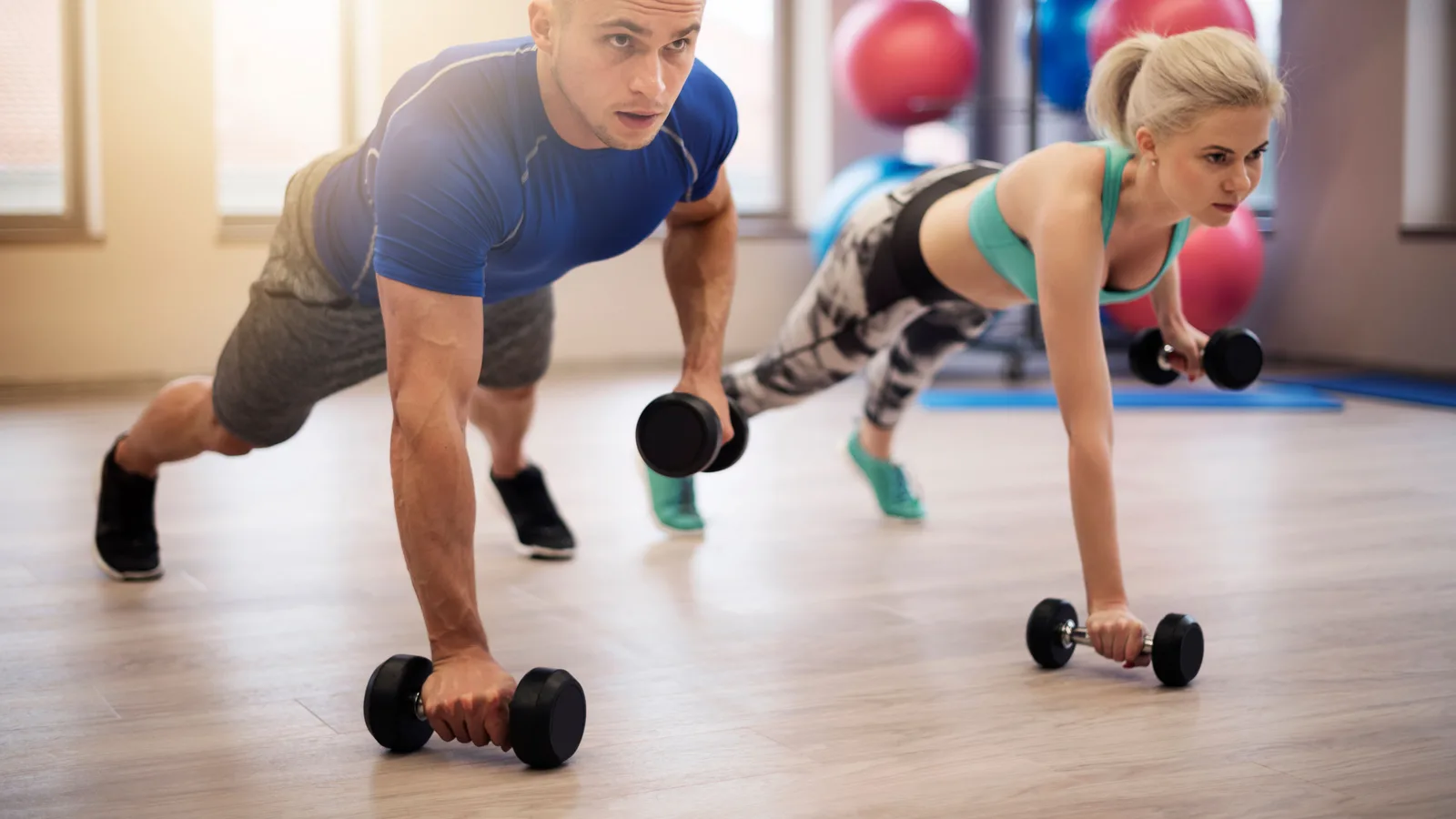
The variable resistance is a feature, not a flaw. On a press-up or a squat the band is light where you are weakest and heaviest where you are strongest, which matches how the joint actually produces force. That's why physios hand you a band and not a dumbbell on your first visit back from a shoulder or knee problem.
Strengths of bands
- Costs a fraction of a dumbbell set and stores in a drawer
- Variable resistance is kind to joints at the start of the range
- Trains every major muscle group, including rows, presses, squats and rotational work
- Packs flat for travel, so your training doesn't stop on holiday
- No spotter needed — you can bail out of a rep at any point
- Excellent for warm-ups, activation work and finishing off a session
Limits of bands
- Hard to measure progress precisely; 'one band thicker' is vague
- Eccentric phase is assisted, so you get less lowering work
- Awkward for heavy squat and deadlift patterns
- Bands wear out — check for nicks, especially near the anchor
- Tension rating systems differ between brands, so sets aren't interchangeable
Where weights win
Free weights are still the gold standard for getting strong, because they let you do the one thing progression demands: add a small, known amount of load and repeat the movement. Going from an 8kg dumbbell to a 10kg one is an unambiguous step. Going from a medium band to a heavy band is a guess, and the bands may not even be from the same maker.
Weights also let you load the eccentric. Lowering a dumbbell under control is where a lot of muscle damage and adaptation happens, and a band simply can't replicate that on a press or a row.
Strengths of weights
- Precise, repeatable progression — you always know what you lifted
- Full loading on the lowering phase
- Heavy compound lifts build strength that carries into everyday life
- Easy to compare sessions and follow a written plan
- A dumbbell doesn't snap
- Wide range of exercises from one pair of adjustable dumbbells
Limits of weights
- Expensive to buy in useful increments
- Takes up space and is a pain to move house with
- Heavy loading means more strain on joints and the lower back
- Barbell work needs a rack and, ideally, a spotter
- Not portable at all
What you actually need at home
- Bands: a workable starter kit
- Two or three loop bands of different thickness, plus one long tube band with handles
- Bands: extras worth having
- A door anchor, ankle straps, and bands with a printed tension rating rather than just a colour
- Weights: a workable starter kit
- A pair of adjustable dumbbells, or a barbell and plates if you have a rack
- Weights: extras worth having
- A bench or a sturdy step, and collars that hold the plates securely
- Floor space
- Bands: roughly 2m x 2m. Weights: enough room to press overhead and step back safely
- Ceiling clearance
- You need headroom for overhead pressing with either tool
If you are starting from nothing, the band kit is the cheaper and more flexible buy, and it will still be useful after you've bought your first set of dumbbells. Nobody serious about home training ends up regretting owning both.
Muscle and strength: the real difference
Muscle grows in response to tension and effort, and both tools deliver that. If you take a band set close to failure on a press, a row and a squat pattern, a few times a week, you will build muscle. That isn't a compromise — it's just training.
The gap opens when you chase maximal strength. A heavy barbell loads your spine, hips and shoulders in a way a band cannot, and the skill of handling a heavy bar is specific. If your goal is a bigger squat or a bodyweight-plus bench press, bands will take you part of the way and then stop.
Who should choose resistance bands
Bands are the right call if any of these sound like you:
- You live in a flat, a house share or anywhere a rack would be unreasonable
- You are rebuilding after an injury, or you train around joints that complain under load
- You want one kit that works at home, in a hotel room and in the park
- You are a complete beginner and want to learn the movement patterns before loading them heavily
- You already go to a gym for the heavy work and want something useful for the days in between
- You want to spend your budget once rather than build a dumbbell collection over years
Who should choose weights
Weights are the right call if:
- Your goal is measurable strength in the squat, bench, deadlift or overhead press
- You have a garage, spare room or garden with space to store plates and train safely
- You like following a written plan with set loads and percentages
- You train with someone who can spot you, or you have a rack with safety bars
- You want the lowering phase fully loaded on every rep
- You are past the beginner stage and your band progression has stalled
A pair of adjustable dumbbells is the sensible middle ground: cheaper and smaller than a barbell set-up, precise enough to progress with, and covering everything from goblet squats to floor presses.
How to progress when there are no plates to add
The usual criticism of bands — that you can't add load — is only true if you think load means plates. Band training progresses through tension and leverage instead:
- Move to the next band thickness in your set
- Step further from the anchor so the band is stretched more at the start
- Start the rep with more slack and finish against full tension
- Slow the lowering phase down to three or four seconds
- Add a pause at the point of maximum tension
- Increase reps or sets until you can comfortably beat your last session
- Double up: run two bands together, or grip the band shorter to shorten the working length
The option most people overlook
Bands and weights are not rivals in the same session. Bands make an excellent warm-up and activation tool before you touch a dumbbell — glute bridges with a loop band, band pull-aparts for the shoulders, banded rows to wake up the back.
They also work as accommodating resistance on the bar itself. Loop a band over the ends of a barbell and you get light at the bottom and heavy at lockout, which is why powerlifters use them. If you own both, you get the precise loading of weights and the joint-friendly, travel-ready pull of bands.
Add up the cost of a decent band set and a pair of adjustable dumbbells and you are still well under the price of a mid-range rack, with far more training options than either alone.
The verdict
Resistance bands win for most people, and they win on the practicalities that decide whether home training actually happens: cost, storage, portability and joint comfort. They are a complete training tool, not a warm-up toy, and a band set plus a door anchor will keep you training for years.
Weights win for a narrower but important group: anyone chasing heavy, measurable strength. If you have the space and the intention to lift properly, the dumbbells or the barbell are worth the money and the floor space — and keep the bands anyway. The best home gyms, in our view, contain both, and the bands get used more often.
Common questions about bands and weights
Can resistance bands completely replace weights?
For general fitness, muscle-building and rehabilitation, yes. For maximal barbell strength — a heavy squat, bench or deadlift — no, because bands can't load the spine and hips the way a loaded bar does.
Do bands build muscle as well as dumbbells?
They can, provided you keep taking sets close to failure and keep increasing tension session to session. The limiting factor with bands is progression, not the tool itself.
Are bands easier on the joints than weights?
They're often more comfortable because tension is lowest at the start of the range and peaks where you're strongest. That said, bands still load joints — they're gentler, not risk-free.
How many bands do I need to start?
Two or three loop bands of different thickness plus one long tube band with handles will cover presses, rows, squats, pull-aparts and rotational work. A door anchor makes the set far more versatile.
Can I use bands and weights in the same workout?
Yes, and it works well. Use bands for the warm-up and activation, do your main heavy lifts with weights, then finish with high-rep band work for extra volume without extra joint strain.
Do resistance bands wear out?
They do, especially latex ones stored in sunlight or used on rough anchors. Check them before each session and replace any band with nicks, pale patches or frayed edges.