The short answer: dumbbells for most home gyms
If you are buying your first weights for a home gym, dumbbells are the safer default. They are easier to learn, easier to fit into a standard strength routine and often easier to progress in small steps. Kettlebells are not a worse tool, but they are a more specialised one: they reward good hip-hinge technique and suit people who want swings, carries and fast circuits.
The differences that actually affect your training
The biggest difference is where the weight sits. A dumbbell is balanced in your hand, so the load feels predictable. A kettlebell hangs below its handle, so the weight pulls away from your wrist and shifts as you move. That offset is why kettlebells feel so good for swings and carries, and why they can feel awkward for slow bicep curls or lateral raises.
| What matters | Dumbbells | Kettlebells |
|---|---|---|
| Main use | Controlled strength work: presses, rows, squats, lunges and isolation exercises. | Ballistic and full-body work: swings, cleans, snatches, carries and goblet squats. |
| Learning curve | Short for most basic lifts; technique is easy to self-check. | Longer, especially for swings and snatches; hip hinge and grip need practice. |
| Load position | Weight sits evenly in the hand, close to the body. | Weight hangs below the handle, creating an offset pull. |
| Progression | Often easier to progress in small steps, especially with adjustable pairs. | Often bought one bell at a time; jumps between sizes can feel big. |
| Space | A rack or adjustable pair can be compact, but pairs multiply. | One bell covers a lot, yet each fixed weight takes floor space. |
| Grip and forearms | Grip works, but many standard lifts ask less of it. | Handle and offset load ask more of grip, wrists and forearms. |
| Cardio effect | Can be brisk with circuits, but less ballistic by design. | Swings and complexes make it easier to train breathing and conditioning. |
| Best for | Most home lifters and anyone new to weights. | Anyone who enjoys movement-led training and has room to swing. |
Strength work: control beats novelty
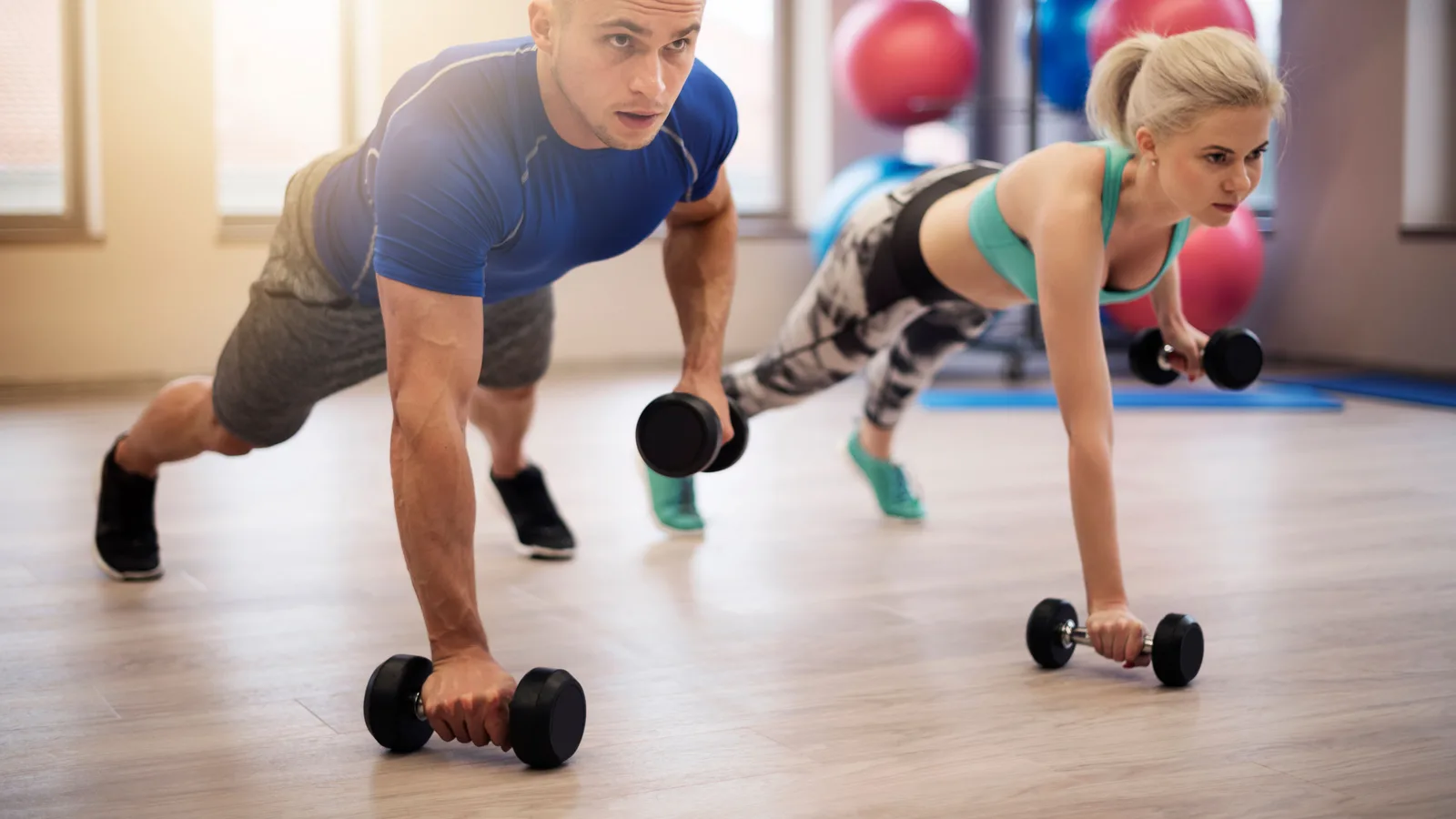
Dumbbells are the more natural choice for controlled strength training. You can press, row, squat, lunge, curl and extend with a balanced load, and you can work one side at a time without the bell pulling your wrist into an awkward position. That makes them useful for beginners and for anyone following a standard strength programme.
Kettlebells shine when you add momentum. Swings, cleans, snatches and high-rep goblet squats train the hips, grip and trunk to work together. They are less suited to isolation work; a kettlebell lateral raise or bicep curl is possible, but the offset load makes it harder to focus on the target muscle.
Space, storage and living with them
Space is where the answer depends on your home. A single kettlebell takes up little room, but fixed kettlebells do not nest, so a set soon claims floor space. Dumbbells can be bought as a pair and stored on a rack, under a bench or in a cupboard; adjustable dumbbells can replace a rack of pairs, though they can be slower to change and need checking for maximum load.
Think about the swing, not just the storage. A kettlebell swing needs clear space in front of you and enough height to clear the floor; a dumbbell workout can be done in a smaller footprint. In a flat with neighbours below, control matters more than the tool: set weights down gently and use a dense mat.
Learning curve and safety
Dumbbells have a lower barrier to entry. Most people can pick up a pair and copy a basic press, row or squat with reasonable form. Kettlebells ask more of the wrist, grip and hip hinge. A swing is a hip snap, not a squat-and-lift; if you squat the bell up or let it pull your lower back into extension, you need to reset with a lighter bell or a coach.
Neither tool is dangerous in itself, but both punish poor setup. Warm up, start lighter than your ego suggests, and keep the area clear. If you have a back, shoulder or wrist issue, get advice from a qualified professional before adding ballistic work.
Who should choose dumbbells
Choose dumbbells if you want to follow a straightforward strength programme, train specific muscle groups or build up gradually. They are also the better choice if you are new to weights and learning on your own. A pair of fixed dumbbells or a good adjustable set will cover more of the average home workout than a single kettlebell.
Why dumbbells win for most
- They map easily onto standard strength exercises: presses, rows, squats, lunges and isolation work.
- The balanced load is easier to control, especially when you are learning.
- You can often progress in smaller steps, particularly with adjustable pairs.
- A pair takes less commitment than a rack of kettlebells and is easier to store.
Dumbbell trade-offs
- A full set of pairs takes up more space than one kettlebell.
- Adjustable dumbbells can be slower to change and need checking for maximum load.
- They are less natural for ballistic swings and fast circuits.
Who should choose kettlebells
Choose kettlebells if your training already includes hip hinges and you want a tool for swings, carries and conditioning. They are a good fit for people who enjoy full-body circuits, have coaching or are confident learning from reputable instruction. A single mid-range bell can be enough for a simple swing-and-carry programme, but it will not replace a pair of dumbbells for every strength exercise.
Why kettlebells earn their place
- One bell can cover swings, goblet squats, carries, rows and presses.
- The offset load challenges grip, wrists and trunk stability.
- Swings and complexes are efficient for conditioning when you want to raise your heart rate.
- They suit movement-led training more than bodybuilding-style isolation.
Kettlebell trade-offs
- The swing, clean and snatch need technique; bad habits are easy to repeat.
- Weight jumps between bells can feel large, so progression needs planning.
- Each fixed weight takes floor space and cannot be nested like plates.
- They are awkward for slow isolation exercises.
Buying checklist before you spend
- Handle: check that the handle is smooth enough for high reps but not so slick that it slips. For kettlebells, make sure your hand fits inside the handle with room to spare.
- Adjustment: with adjustable dumbbells, check how quickly you can change weight, the maximum load and whether the cradle or stand fits your space.
- Base: a kettlebell should sit flat without wobbling. A rough base can mark floors.
- Increments: choose a range that lets you progress without huge jumps. This matters more than the total weight you can buy.
- Storage: measure the footprint, including the space you need to swing or press, before you order.
Final verdict: dumbbells first, kettlebell second
The overall winner for most home gyms is dumbbells. They are the more versatile first purchase for standard strength work, they are easier to learn and they are easier to progress. If you only buy one type of weight, buy a pair you can control and use consistently.
Kettlebells win when your goal is specific: swings, carries, cleans, snatches and conditioning. They are not a replacement for dumbbells in every routine, and they are not automatically better for fat loss. The sensible path for many people is dumbbells first, then one kettlebell once the basic hinge is comfortable.
Dumbbells vs kettlebells: your questions
Can I use a kettlebell for every dumbbell exercise?
No. Goblet squats, rows and some presses translate, but isolation moves and exercises that need a balanced load usually work better with dumbbells. Kettlebell-specific lifts such as cleans and snatches need their own technique.
Are kettlebells better for fat loss?
Neither tool is inherently better. Fat loss comes from a consistent calorie deficit and overall activity; kettlebell swings can raise your heart rate quickly, but dumbbell circuits can do the same.
How many kettlebells do I need to start?
One is enough for a simple swing, carry and goblet-squat programme. Add a second only when you can complete the reps with good technique and need a heavier or lighter bell for different lifts.
Do adjustable dumbbells feel different from fixed dumbbells?
They can feel bulkier in the hand and may take longer to change, but they save space. Check the mechanism and maximum load before buying.
Should I buy a kettlebell or dumbbells for a small flat?
A single kettlebell is compact to store, but you need clear space to swing it. Dumbbells can be stored under a bench or in a cupboard and need less swing clearance. Measure both the storage footprint and the workout zone.