The quick answer: which trap workout suits you
Most searches for the best trap workouts return a list of shrug variations and little else. The trapezius is a large, three-part muscle, and the movements that grow it best load it from different angles: a heavy shrug for the upper fibres, carries and pulls for the mid-back, and a light, controlled raise for the lower portion.
For most lifters our top pick is the barbell shrug — it is the simplest way to put serious load on the upper traps and the easiest to progress week to week. If you would rather train traps, grip and trunk in one short session, take the trap-bar farmer's carry instead. Anyone who presses a lot or sits at a desk all day should start with cable face pulls and the prone incline Y-raise, the two picks that hit the parts shrugs miss.
| Workout | Best for | Kit needed | Difficulty |
|---|---|---|---|
| Barbell shrug | Best overall | Barbell, plates, rack | Low |
| Trap-bar farmer's carry | Grip and total-body strength | Trap bar, floor space | Low to moderate |
| Cable face pull | Posture and mid-back | Cable stack, rope | Low |
| Single-arm dumbbell shrug | Uneven shoulders, home kit | One dumbbell | Low |
| Prone incline Y-raise | Lower traps, neck comfort | Incline bench, light dumbbells | Moderate |
The 5 best trap workouts, reviewed
Each of these works as the backbone of a trap session, but none of them does the whole job alone. Pair one heavy upper-trap movement with one lighter mid- or lower-trap movement and you have a complete programme in under fifteen minutes of work.
Best overall
Barbell shrug
4.7/5
Set the bar in a rack at mid-thigh, take a grip just outside your hips and stand tall with your arms straight. Shrug your shoulders straight up towards your ears — no rolling — pause for a second at the top, then lower under control until you feel the traps stretch. Three to four sets of 8–15 reps is plenty; add a little weight once you hit the top of the range on every set. Keep the chin tucked and the ribs down so the movement comes from the shoulder blades rather than the lower back.
Why it works
- Loads the upper traps harder than any dumbbell version
- Simple enough to learn in a single session
- Small weight jumps are easy to add with fractional plates
- Works with a standard bar, rack and plates you already have
Watch out for
- Grip often gives out before the traps do — straps help
- Trains the upper fibres only
- Needs a barbell and rack, so not a home option for everyone
Best for grip and total-body strength
Trap-bar farmer's carry
4.5/5
Load a trap (hex) bar, stand between the handles, hinge down and pick it up with a flat back. Walk 20–30 metres with short, quick steps, shoulders pulled back and down, ribs stacked over hips, then put it down the way you picked it up. Three to five trips with a heavy but controlled load is a full trap session on its own. The isometric hold does the work, so resist the urge to shrug the weight upwards as you walk.
Why it works
- Trains traps, grip, trunk and legs in one movement
- Very little technique to learn
- Easy to add weight over time
- Very time-efficient — a few trips and you are done
Watch out for
- Needs a trap bar and a stretch of clear floor
- Grip fatigues quickly without straps
- No squeeze at the top like a shrug gives you
Best for posture and mid-back
Cable face pull
4.4/5
Set a rope attachment at roughly eye height on a cable stack. Take a thumbless grip, step back until the cable is taut, then pull the rope towards your forehead while driving the elbows high and wide. As the rope reaches your face, rotate your hands outwards and squeeze the shoulder blades together for a beat before returning slowly. Two to three sets of 12–20 reps at a light weight beats heavy, sloppy reps here every time.
Why it works
- Hits the mid and lower traps plus the rear delts
- Comfortable for most shoulders
- Quick to bolt on to the end of any session
- Easy to scale for complete beginners
Watch out for
- Light loading limits how much size it can build
- Very easy to cheat with too much weight
- Requires a cable stack or resistance band anchor
Best for uneven shoulders or home kit
Single-arm dumbbell shrug
4.2/5
Stand beside a bench or rack, hold one dumbbell at your side and let the other arm hang free. Shrug the loaded shoulder straight up towards your ear, hold for a second or two, then lower slowly. Keep your head level and resist the urge to lean away from the weight. Do all your reps on one side, then swap, and match the weaker side's rep count on the stronger one.
Why it works
- Useful if one shoulder sits or works higher than the other
- Needs one dumbbell and a bit of floor
- Trains the trunk against side-bending while you work
- Load can be matched to each side separately
Watch out for
- Takes roughly twice as long as a barbell shrug
- Dumbbell grip limits how heavy you can go
- Easy to lean away from the weight without noticing
Best for lower traps without neck strain
Prone incline Y-raise
4.1/5
Set an adjustable bench to a shallow incline of around 30–45 degrees and lie face down with your chest supported. Hold a light dumbbell in each hand with the thumbs pointing up, then raise the arms out and forwards into a Y shape, thinking about pulling the shoulder blades down and back rather than lifting with the neck. Pause at the top and lower slowly. Two to three sets of 10–15 reps with very light weight is the norm — if you can swing it up easily, it is too heavy.
Why it works
- The most direct lower-trap option on this list
- Minimal neck involvement compared with shrugs
- Very light weights, so it suits a home set-up
- Good counterbalance to lots of pressing
Watch out for
- Hard to feel in the right place at first
- Tiny loads mean slow progress
- Needs an adjustable bench to do properly
What the traps actually do — and why one exercise won't cut it
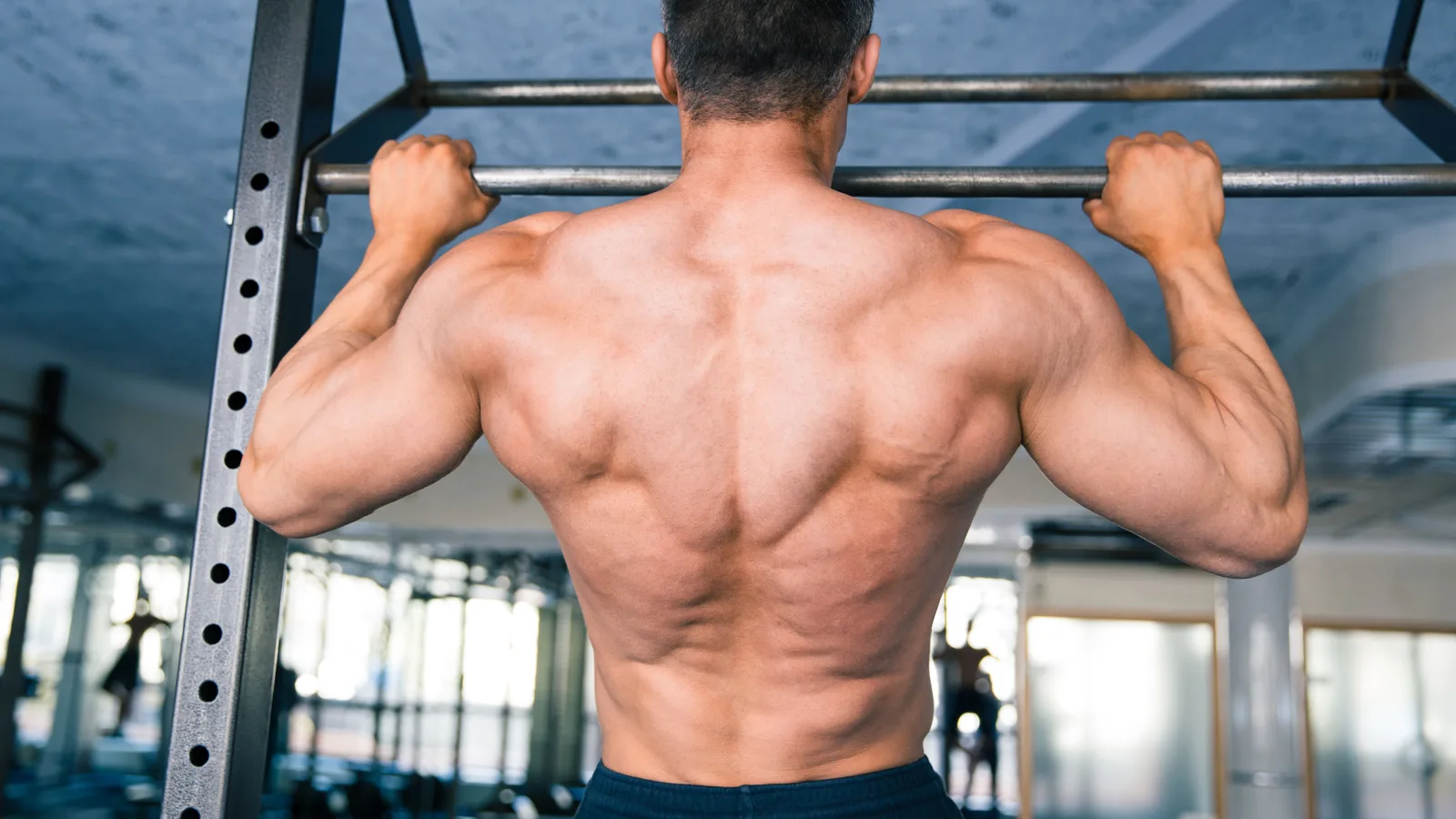
The trapezius runs from the base of the skull down to the middle of the back and out to the shoulder blade. It is usually split into three regions that do quite different jobs. A shrug only really trains the top third, which is why a trap programme built entirely on shrugs tends to plateau: the mid and lower portions never get a reason to grow.
Think of the three regions as a team. The upper traps lift the shoulder blade, the mid traps pull it back, and the lower traps rotate it upwards so the arm can reach overhead. Train all three and the whole upper back looks thicker from behind — and shoulders generally feel better under pressing loads.
- Upper traps
- Shrugs, carries and heavy deadlift holds — they elevate the shoulder blade towards the ear.
- Mid traps
- Face pulls, rows and band pull-aparts — they squeeze the shoulder blades together.
- Lower traps
- Prone Y-raises and overhead work — they rotate the shoulder blade upwards.
- Common weak link
- The lower traps, particularly for anyone who spends the working day at a desk.
How to choose the right trap workout for you
Four things decide which of these picks belongs in your week:
- Kit you can actually get to. A trap bar beats a barbell shrug on paper, but only if you can reach one three times a week.
- A joint position you can load comfortably. If a straight bar at the thigh irritates your shoulder, a neutral-grip carry or a face pull will serve you better.
- Room to progress. Traps respond to load, so pick something you can add a kilo or a rep to most months.
- Time per session. Carries and face pulls get the job done in under ten minutes, which matters if trap work is an add-on rather than the main event.
- Potential to add load over time
- 5.0/5
The single biggest factor in trap growth. Whatever you choose, you need a way to make it harder.
- Shoulder-friendly position
- 4.5/5
Neutral grips and supported positions tend to be kinder than a bar hanging straight down.
- Uses kit you already own
- 4.0/5
Dumbbells and a bench cover three of the five picks without a gym membership.
- Time cost per session
- 4.0/5
Carries and face pulls are easy to fit into the end of an existing workout.
- Skill required
- 3.5/5
All five are low-skill, but carries and Y-raises need a little coaching to feel right.
How to programme trap work into your week
The traps recover quickly and can be trained two or three times a week, especially because rows, pulldowns and deadlifts already work them. A simple approach: one heavy upper-trap movement on a pull or leg day, and one lighter mid- or lower-trap movement at the end of a push day.
- Barbell shrugs: 3–4 sets of 8–15 reps, with a one-to-two-second pause at the top
- Trap-bar carries: 3–5 trips of 20–30 metres
- Face pulls: 2–3 sets of 12–20 reps
- Prone Y-raises: 2–3 sets of 10–15 reps
Add weight only when every set reaches the top of the rep range with clean form. Chasing a heavier bar with a shortened range is the fastest way to stall.
Trap-training mistakes worth fixing
- Living on shrugs alone. Add a face pull or a Y-raise or the mid and lower traps stay underdeveloped.
- Letting the neck do the work. If your chin juts forward or your head tips back on each rep, the load is too heavy for the position you are holding.
- Skipping the lowering phase. The stretch under control is where a lot of the growth stimulus sits, so don't let the weight drop.
- Chasing soreness. Traps can be sore for days after a new movement; that says nothing about whether the session worked.
- Defaulting to narrow-grip upright rows. A close grip pulled to the chin puts the shoulder in a rotated position plenty of lifters find uncomfortable — a wider grip to the lower chest, or a swap to face pulls, usually feels better.
The verdict
Trap workout FAQs
How many times a week should I train traps?
Two sessions a week is enough for most people, since the traps also work in rows, pulldowns and deadlifts. Three is fine if you keep each session to a couple of sets.
Can I build traps at home without a barbell?
Yes. Single-arm dumbbell shrugs, heavy dumbbell carries and prone Y-raises on an incline bench cover all three regions of the trapezius with minimal kit.
Do deadlifts and rows count as trap work?
They do — the traps hold the shoulder blades steady under load in both movements. They are not a full substitute for a direct shrug or carry if bigger traps are the goal.
Should traps go on shoulder day or back day?
Either works. Most lifters put heavy shrugs or carries at the end of a pull or leg day, and face pulls at the end of a push day.
Are upright rows bad for your shoulders?
Not for everyone, but a narrow grip pulled to the chin puts the shoulder in an internally rotated position that some people find irritable. A wider grip pulled to the lower chest, or swapping to face pulls, is often more comfortable.